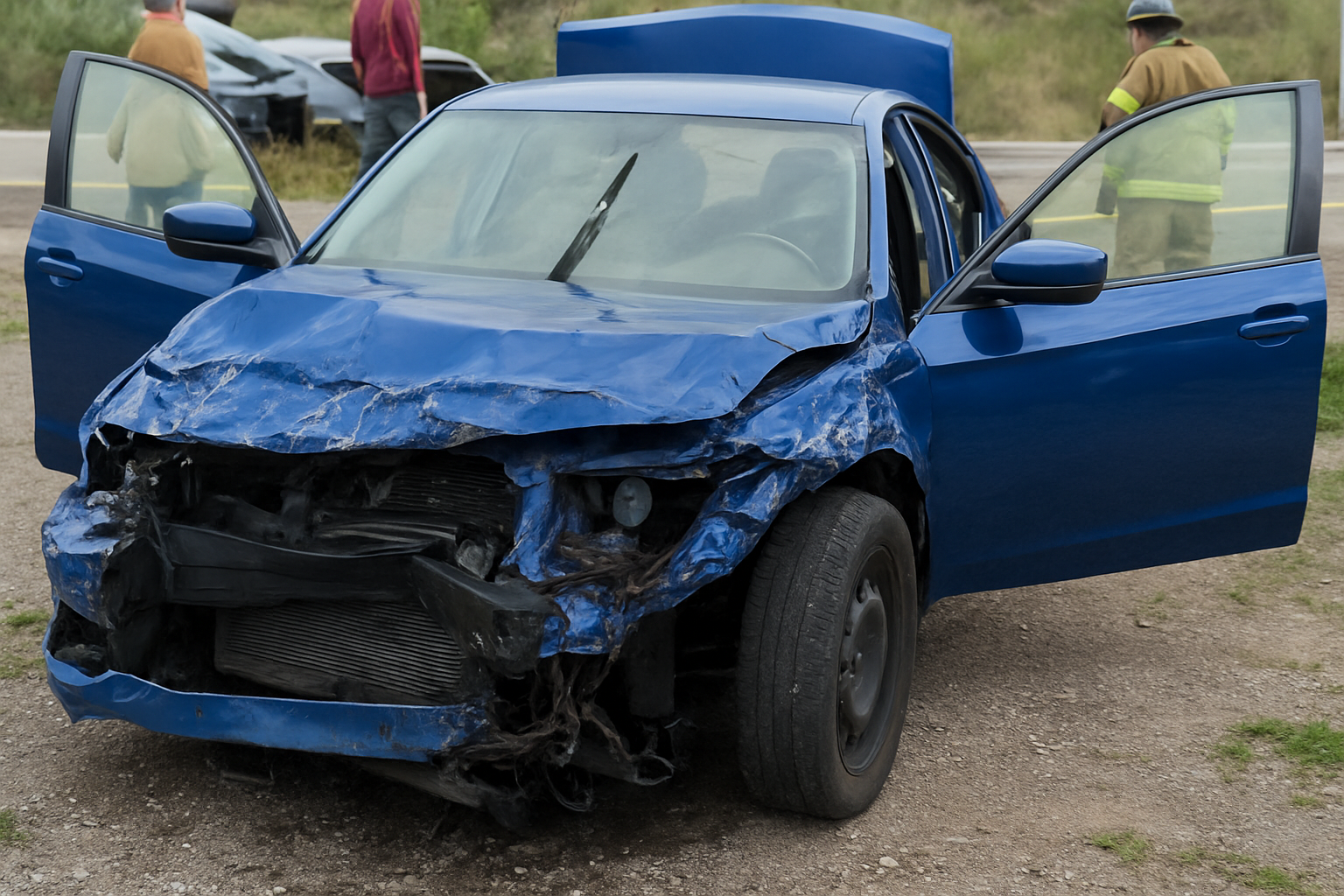
Michigan's no-fault system works differently than the 49 other states. If you're buying your first policy here, understanding PIP, MCCA fees, and opt-out rules will save you hundreds per month.
What No-Fault Actually Means for Your First Michigan Policy
You just got your license or your first car in Michigan, and every insurance quote includes something called "PIP" that costs more than everything else combined. That's because Michigan is one of only 12 no-fault states, and it operates the strictest version in the country. No-fault means your own insurance pays your medical bills after an accident regardless of who caused it — you don't sue the other driver or wait for their insurer to cover you.
The coverage doing this work is called Personal Injury Protection, or PIP (sometimes called "no-fault coverage" on your quote). PIP is mandatory for every Michigan driver — you cannot opt out entirely, even with a learner's permit or if you're on a parent's policy. What changed in 2019 is that you can now choose lower PIP limits instead of the previous unlimited-only requirement, which is where first-time buyers often leave money on the table.
Here's the decision you'll face on every quote: unlimited PIP, $500,000, $250,000, $50,000, or opt-out to a qualifying health insurance plan. Most insurers default to unlimited when you request a quote online. For drivers under 25 in Detroit, unlimited PIP can run $250-$400/mo just for that one coverage. Dropping to $250,000 PIP can cut that cost by 30-50% if you have qualifying health insurance, but only if you actively choose the lower limit during the quote process.
The MCCA Fee: A Separate Charge You Can't Avoid (Mostly)
Every Michigan quote includes a line item called the MCCA fee or "catastrophic claims assessment." This isn't your insurer charging you extra — it's a per-vehicle fee set annually by the Michigan Catastrophic Claims Association to fund lifetime medical care for severely injured accident victims. As of July 2024, the MCCA fee is $136 per vehicle per year if you carry unlimited PIP, or $48 per vehicle if you choose $500,000 PIP. You pay $0 MCCA fee if you select $250,000, $50,000, or opt-out PIP.
This fee is why your quote breakdown looks different from every other state. Your premium isn't just what the insurer charges — it's their rate plus this mandatory assessment. For first-time drivers comparing quotes, make sure you're looking at the total annual cost including MCCA, not just the base premium. A quote showing $180/mo might actually be $191/mo once the $136/year MCCA fee is divided across 12 months.
The savings opportunity: if you have health insurance through a parent, employer, or marketplace plan, choosing $250,000 PIP eliminates the MCCA fee entirely and typically cuts your total PIP cost in half compared to unlimited. Most first-time buyers don't realize the fee scales with your PIP choice until after they've already purchased a policy.
Opting Down vs. Opting Out: What You Actually Qualify For
Michigan law allows you to reduce PIP below unlimited only if you have "qualified health coverage" — that means Medicaid, Medicare, or a private health insurance plan that covers auto accident injuries. You'll need to show proof during the application, usually a health insurance card or policy number. If you're under 26 and still on a parent's health plan, that qualifies. If you have no health insurance at all, you must purchase unlimited PIP with no opt-down available.
Opting down means choosing $500,000, $250,000, or $50,000 PIP while keeping auto insurance. Opting out entirely — selecting "PIP not applicable" — is only allowed if every driver in your household is enrolled in Medicare or Medicaid, which almost never applies to first-time drivers under 25. Even if you're on Medicaid yourself, if you live with a parent or roommate who isn't, you cannot fully opt out.
Most first-time Michigan drivers should choose $250,000 PIP if they have any health insurance. That limit covers far more than most accident scenarios require, eliminates the MCCA fee, and cuts monthly costs significantly compared to unlimited. The $50,000 option exists but offers minimal savings beyond $250,000 while increasing your risk if you're seriously injured. Unlimited PIP makes sense only if you have no health insurance or a high-deductible plan with low coverage limits.
The Other Required Coverages: Property Protection and Residual Liability
Beyond PIP, Michigan requires two other coverages that work differently than liability insurance in other states. Property Protection Insurance (PPI) is a flat $1 million coverage that pays for damage your car causes to other people's property — parked cars, buildings, fences — but not the other driver's vehicle if they're moving. PPI typically costs $15-$35/mo and is non-negotiable; every policy must include it.
Residual liability coverage (called "bodily injury and property damage" on most quotes) is technically optional under Michigan law, but functionally required. It covers injuries and vehicle damage you cause to others, but only for amounts that exceed what no-fault already paid. You'll see minimum limits of $50,000 per person and $100,000 per accident for bodily injury, plus $10,000 for property damage. Lenders require this if you finance a car, and driving without it leaves you personally liable for any damage beyond no-fault thresholds.
For first-time drivers, these coverages are straightforward: accept the minimum required limits for PPI (you have no choice), and carry at least $100,000/$300,000 residual liability if you can afford it. That higher limit typically adds $20-$40/mo over the state minimum but protects you if you cause a serious accident. Unlike PIP, liability limits don't trigger additional fees or assessments. collision coverage
Collision and Comprehensive: Not Required, But Often Necessary
Michigan doesn't require collision or comprehensive coverage by law, but your lender will if you finance or lease your vehicle. Collision pays to repair your car after an accident regardless of fault. Comprehensive covers theft, vandalism, weather damage, and hitting an animal. Both come with a deductible — the amount you pay out of pocket before insurance kicks in — typically $500 or $1,000.
For first-time drivers in Michigan, these coverages often cost more than in other states because they're priced based on your likelihood of filing a claim, and young drivers statistically file more claims. Collision and comprehensive combined typically add $80-$180/mo for a driver under 25 with a financed vehicle worth $15,000-$25,000. Choosing a $1,000 deductible instead of $500 can reduce that cost by 15-20%, but only if you have $1,000 saved and accessible for repairs.
If you own an older car outright — worth less than $3,000 — and you're trying to minimize costs, dropping collision and comprehensive can cut your monthly bill significantly. You'll still carry full no-fault coverage (PIP, PPI, and liability), but you'll pay out of pocket if your car is totaled or stolen. This is a reasonable choice for first-time buyers driving older vehicles who can replace the car cheaper than paying years of collision premiums.
Why Michigan Quotes Are Higher and What Actually Lowers Them
Michigan consistently ranks as one of the most expensive states for car insurance, particularly for drivers under 25. The no-fault system is the primary driver: insurers must pay unlimited or high-limit medical claims regardless of fault, which costs more to underwrite than traditional tort states. First-time drivers in Detroit see average full-coverage premiums around $400-$550/mo, while those in smaller cities like Grand Rapids or Kalamazoo pay $200-$350/mo for identical coverage.
Age and experience matter more in Michigan than almost anywhere else. A 19-year-old driver with six months of licensed experience will pay 40-70% more than a 25-year-old with the same driving record, even with identical coverage. Insurers view young drivers as higher risk for both frequency (more likely to have an accident) and severity (more likely to cause expensive injuries under no-fault). There's no shortcut here — your rates will drop meaningfully around age 21, again at 25, and with each year of claim-free driving.
What actually reduces your premium: choosing $250,000 PIP instead of unlimited (20-40% reduction), increasing your collision deductible to $1,000 (10-15% reduction), staying on a parent's policy as a listed driver if allowed (often cheaper than your own policy until age 21), and comparing quotes from at least four insurers. Michigan operates an assigned-risk pool for high-risk drivers, but as a first-time buyer with no accidents or violations, you should qualify for standard market rates if you shop around.
Getting Your First Quote: What Information You'll Need
When you request a Michigan car insurance quote, you'll need your driver's license number, vehicle VIN (17-digit identifier on your registration or dashboard), current odometer reading, and proof of health insurance if you want to opt down from unlimited PIP. If you're currently on a parent's policy, you'll also need that policy number and the date you want your own coverage to start — most insurers require continuous coverage with no gaps to avoid higher rates.
The quote process will ask you to choose your PIP limit first, because that decision affects everything else. Start with $250,000 PIP if you have health insurance — you can always adjust upward, but most online quote tools default to unlimited and don't surface lower-cost options unless you manually explore them. You'll then select your liability limits, deductibles, and any optional coverages like rental reimbursement or roadside assistance.
Plan to compare at least three quotes before buying. Michigan insurers price no-fault risk very differently — the same 22-year-old driver in Lansing with a clean record might get quoted $285/mo from one carrier and $450/mo from another for identical coverage. The difference isn't coverage quality; it's how each insurer calculates risk for your specific age, location, and vehicle. Request all quotes within a two-week window so you can compare apples-to-apples pricing, and make sure every quote includes the MCCA fee in the total cost.