New drivers overpay because they misunderstand key terms like liability limits, deductibles, and comprehensive coverage. This guide translates insurance language into decisions that directly affect your monthly rate.
Why Insurance Terminology Matters More for First-Time Buyers
First-time drivers pay an average of $250–$400 per month for full coverage, approximately 60–80% more than drivers over 25 with clean records. A significant portion of this premium comes from purchasing the wrong coverage mix because of terminology confusion—not just age-related risk factors.
When you don't understand the difference between liability limits and comprehensive coverage, you either overpay for protection you don't need or leave yourself exposed to massive out-of-pocket costs. A 2023 Insurance Information Institute study found that 44% of drivers under 25 couldn't correctly identify what their liability coverage actually pays for, leading many to purchase duplicative coverage or skip essential protection entirely.
This article breaks down the 12 insurance terms that directly impact your monthly rate, explains exactly what you're paying for, and shows you which coverage decisions matter most when you're building your first policy. Unlike generic glossaries, every term here connects to a specific pricing decision you'll face when comparing quotes. liability coverage protects others
Premium vs. Deductible: The Two Numbers That Control Your Cost
Your premium is the amount you pay each month to keep your insurance active, whether you file a claim or not. For new drivers, full coverage premiums typically range from $200–$450 per month depending on your state, vehicle, and driving record. This is the baseline cost of having insurance.
Your deductible is the amount you pay out-of-pocket before your insurance covers the rest when you file a claim for damage to your own vehicle. Standard deductible options are $250, $500, $1,000, and $2,000. Choosing a $1,000 deductible instead of $500 typically reduces your monthly premium by $15–$30, but means you'll need to have that extra $500 available if you're in an at-fault accident.
The strategic decision: If you're a safe driver with an emergency fund of at least $1,000, choosing the higher deductible saves you $180–$360 per year. If you're still building savings or have a higher accident risk as a very new driver, the $500 deductible costs more monthly but protects you from a large unexpected bill. Most financial advisors recommend new drivers start with a $500 deductible for the first 1–2 years, then increase it as they gain experience and savings.
Liability Coverage: The Foundation That Protects Your Future
Liability insurance pays for damage and injuries you cause to other people and their property when you're at fault in an accident. It does not cover your own vehicle or injuries—only what you're legally responsible for. Every state except New Hampshire requires liability coverage, and it's split into two components with limits expressed as three numbers, like 50/100/50.
The first number is bodily injury liability per person (in thousands)—the maximum your insurance pays for one person's injuries. The second number is bodily injury liability per accident—the total your insurance pays for all injuries combined in a single crash. The third number is property damage liability—the maximum for damage to other vehicles, buildings, or property. A 50/100/50 policy means $50,000 per person injured, $100,000 total per accident for injuries, and $50,000 for property damage.
Most states require minimum liability limits between 25/50/25 and 50/100/50, but these minimums are dangerously low. The average car accident injury claim settles at $23,000, and serious injuries easily exceed $100,000. If you cause an accident and the damages exceed your liability limits, you're personally responsible for the difference—and creditors can garnish your wages or place liens on future assets. New drivers should carry at minimum 100/300/100 coverage, which typically costs only $20–$40 more per month than state minimums but provides exponentially better protection.
Many young drivers confuse liability coverage with full coverage. Liability is required and protects others from your mistakes. The coverages below—collision and comprehensive—are optional and protect your own vehicle.
Collision and Comprehensive: When Your Own Car Gets Damaged
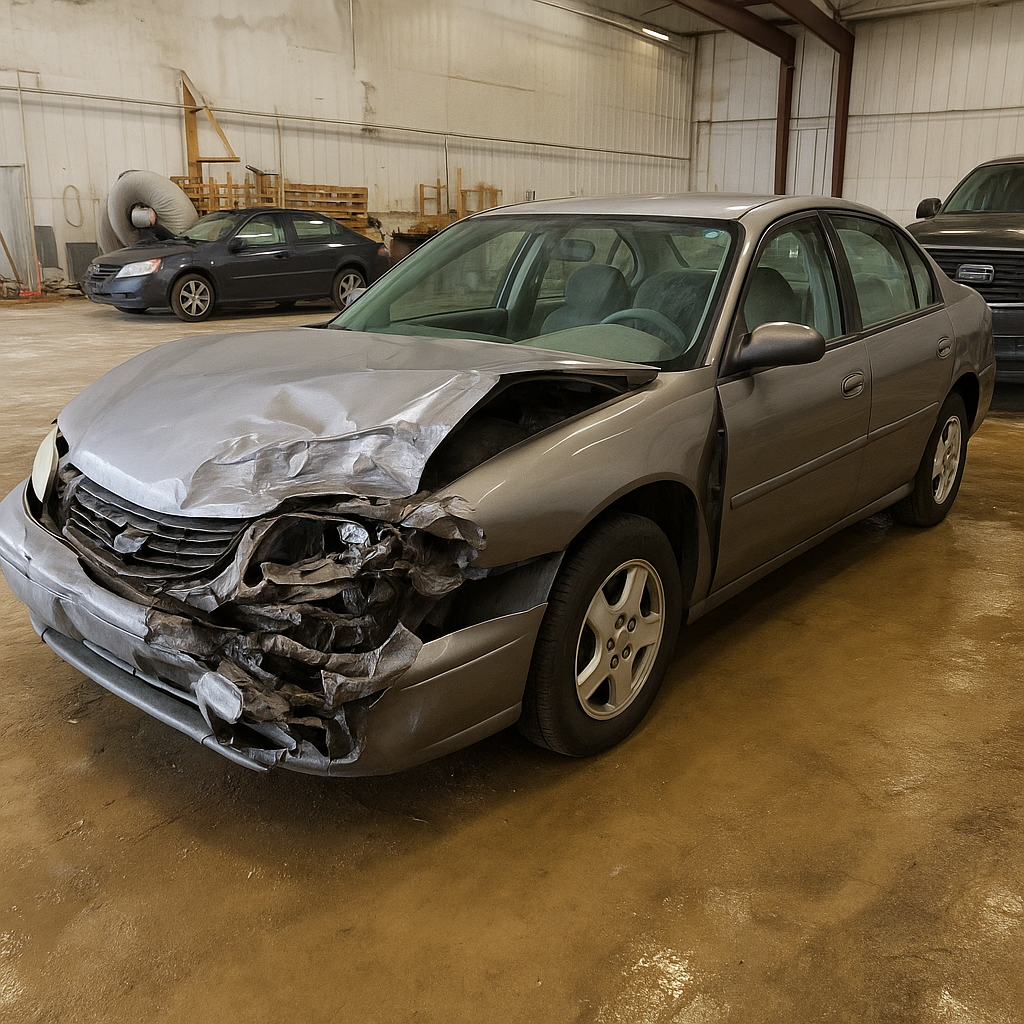
Collision coverage pays to repair or replace your vehicle when you crash into another car, object, or roll over—regardless of who's at fault. If you hit a guardrail, rear-end someone, or get sideswiped, collision coverage handles your vehicle damage after you pay your deductible. For a 22-year-old driver with a $20,000 car, collision coverage typically costs $80–$150 per month.
Comprehensive coverage pays for damage to your vehicle from nearly everything except collisions: theft, vandalism, hail, flooding, fire, hitting a deer, or falling tree branches. It's often called "other than collision" coverage. Comprehensive typically costs $25–$60 per month for new drivers, significantly less than collision because these events are less frequent and less costly on average.
The coverage decision comes down to your vehicle's value and your financial situation. If your car is worth less than $4,000, paying $1,200+ per year for collision and comprehensive may not make sense—you could replace the vehicle for roughly the same cost. If you financed or leased your vehicle, your lender requires both coverages until the loan is paid off. If you own your car outright and it's worth $8,000 or more, these coverages protect you from absorbing the full replacement cost after an accident.
Uninsured Motorist Coverage: Protection When the Other Driver Can't Pay
Approximately 13% of drivers nationally have no insurance, and in some states that figure exceeds 20%. Uninsured motorist coverage (UM) pays for your injuries and vehicle damage when you're hit by a driver with no insurance or who flees the scene in a hit-and-run. Underinsured motorist coverage (UIM) covers the gap when the at-fault driver has insurance but their liability limits are too low to cover your damages.
UM/UIM coverage mirrors your liability limits—if you carry 100/300/100 liability, you can purchase 100/300/100 UM/UIM. This coverage typically costs $5–$15 per month, making it one of the most cost-effective protections available. In 20 states, UM coverage is required, and in several others, insurers must offer it and you must explicitly decline it in writing.
For young drivers who can't afford to be out of work due to injuries or absorb vehicle replacement costs, UM/UIM is essential. Your own liability coverage won't help you if someone else causes the accident—this coverage steps in when the at-fault driver's insurance is insufficient or nonexistent.
Medical Payments and Personal Injury Protection: Who Pays Your Hospital Bills
Medical Payments coverage (MedPay) pays for medical expenses for you and your passengers after an accident, regardless of fault. It covers hospital bills, doctor visits, surgery, ambulance rides, and sometimes funeral costs. MedPay limits typically range from $1,000 to $10,000 and cost $3–$10 per month depending on the limit you choose.
Personal Injury Protection (PIP) is a more comprehensive version required in no-fault states like Florida, Michigan, New Jersey, New York, and Pennsylvania. PIP covers medical expenses plus lost wages, rehabilitation costs, and sometimes child care or household services if you're injured and can't work. PIP limits and costs vary dramatically by state—Michigan's unlimited PIP historically cost drivers an extra $100+ per month, though recent reforms have reduced that burden.
If you have strong health insurance through a parent's plan or employer, MedPay may be redundant—your health insurance already covers your medical bills. But if you have a high health insurance deductible or limited coverage, a $5,000 MedPay policy for $5–$8 per month provides valuable gap coverage after an accident. Check whether your health insurance has exclusions for auto accidents, which some plans do.
How These Terms Connect When You Compare Quotes
When you request quotes, you'll see each coverage listed with its limit and corresponding monthly cost. A typical quote for a 23-year-old new driver might show: 100/300/100 liability at $110/mo, collision ($500 deductible) at $125/mo, comprehensive ($500 deductible) at $40/mo, and 100/300/100 UM/UIM at $12/mo, for a total of $287 per month.
Understanding the terminology lets you adjust each component strategically. Raising your collision deductible to $1,000 might drop that line to $100/mo, saving $25 monthly. Declining collision entirely on an older vehicle might cut $125/mo. Increasing liability to 250/500/100 might add only $15/mo but dramatically improve your protection.
The most expensive mistakes new drivers make: carrying state minimum liability (leaving yourself exposed to lawsuits), adding collision to a car worth under $3,000 (paying more in premiums than the vehicle's value), and skipping UM/UIM coverage (one of the best values in insurance). Understanding each term's function helps you build a policy that protects what matters without paying for redundant or unnecessary coverage. compare personalized quotes